How to start writing a book about your life
You do not have to be a writer. You only need one small memory to begin.
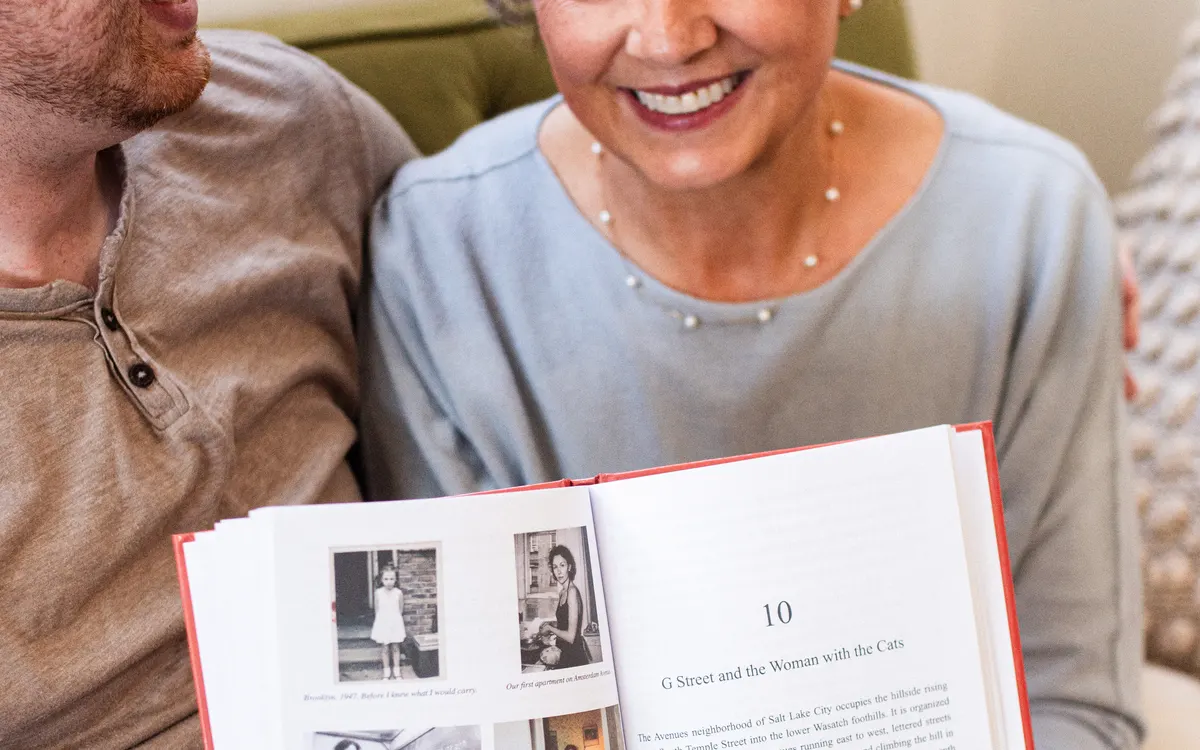
You want to start writing a book about your life. You want your children and grandchildren to hold it. You want them to read it and know you better. Maybe you have said it for years: “I want to write my life story.”
But a blank page stops most people. Where do you begin? With the day you were born? With school? A whole life feels too big, so the page stays blank.
So do not start by writing. Start by talking. Tell one small memory at a time. The book grows from there.
Here are 7 easy steps. After them come 20 questions to get you started. And we have a free book to help: 58 pages of simple ways to tell your stories well.
Free book
The making of a great life story
58 pages of simple ways to tell your stories well. We will email it to you. It is free.
How to begin writing a book about your life in 7 steps
1. Decide who the book is for
A book for everyone is hard to write. A book for one person is easy. Pick someone. A daughter. A grandson. Then tell each story as if you are talking to them.
2. Start with one clear memory, not your birth
Most people try to start on the day they were born. But nobody remembers that day. Start with a memory you can still see. The day you got your first car. The kitchen in your first home.
3. Answer one question at a time
“Tell your life story” is too big. “What was your first job?” is small. A small question gets a real answer. So work from a list of questions, one at a time.
4. Say it out loud first
You have told these stories for years. You tell them well. So say the story out loud before you write it. Better yet, record it on your phone. Talking keeps your own voice in the story.
5. Give it ten minutes a week
A whole weekend of writing sounds good. But it wears you out, and you may not come back. Ten minutes a week is easy to keep. One short story a week adds up to a book.
6. Add names, places and photos
Details make a story real. Write the street, the town and the year. Give people their full names. Then find a photo that goes with the story. Your family will look at it for a long time.
7. Put it in order last
Do not worry about order while you tell your stories. Tell them as they come to you. When you have many, sort them from childhood to today. That is when it starts to look like a book.
20 questions to get you started
You do not need all 20 today. Pick the one you can answer right now. Tell it out loud. Then pick the next one.
Childhood
- What was the house you grew up in like?
- Who was your best friend when you were ten, and what did you do together?
- What got you into trouble as a child?
- What did your mother or father always say?
Work
- What was your first job, and what did it pay?
- Who taught you the most about your work?
- What is the hardest day of work you remember?
Love
- How did you meet the person you married?
- What did you do on your first date?
- What do you remember most about your wedding day?
Family
- What do you remember about the day each of your children was born?
- What family trip do you still laugh about?
- What holiday tradition did your family keep every year?
- What did your children do that made you most proud?
Hard times
- What was the hardest year of your life, and what got you through it?
- When did you have very little money, and how did you manage?
- What is a choice you would make differently now?
What you learned
- What are you most proud of in your life?
- What do you know now that you wish you had known at twenty?
- What do you want your grandchildren to know about you?
If writing is the hard part
Some people read this far and still do not write. That is normal. Writing is work. Talking is not.
That is why we made Ethos. It turns your spoken stories into a printed book. Here is how it works.
One question a week. It comes by email. You open the link. There is nothing to download.
You answer by voice. No typing. You just talk, the way you would to a grandchild.
The next question comes from what you said. It is designed as a biographer style conversation. New questions are written from what you have already shared.
Your answers become written chapters. Spelling and grammar are fixed. The words still sound like you. You can read every chapter and change any word.
You get a hardcover book. Your finished story is printed as a hardcover book and mailed to you.
Your voice stays with your family. Every recording is yours to keep.
There is a 30 day money back guarantee on a first purchase.
Is the book for your mother or father instead? See a life story book for a parent.
Writing your story: questions people ask
How do I start writing a book about my life?
Do not start at the beginning. Pick one clear memory and tell it out loud. Then answer one question at a time, for ten minutes a week.
Do I need to be a good writer?
No. Your family wants your voice, not perfect sentences. Tell the story the way you would at the kitchen table. You can fix the words later.
How long does it take to write your life story?
Every book is different, so there is no set time. A few minutes a week is enough. You go at your own pace, and the book is done when you say it is.
What should I write about first?
Start with a story you have told many times. It is easy to tell, and your family already loves it. The 20 questions on this page will give you more.
Can I tell my story out loud instead of writing?
Yes. Many people find talking much easier than writing. You can record yourself on a phone. With Ethos you answer one question a week by voice, and your answers are turned into written chapters.
Is there a free guide to writing my life story?
Yes. The making of a great life story is a free 58 page book from Ethos. Type your email on this page and we will send it to you.
What should my life story book include?
Your childhood, your work, your family, the hard times and what you learned. Names, places and photos make it real. It does not need every year. It needs the stories your family will want to read again.
Free book
The making of a great life story
58 pages of simple ways to tell your stories well. We will email it to you. It is free.
Your book starts with one memory
Picture your grandchild opening your book. Your name is on the cover. Your stories are inside, in your own words.
That book starts with one small memory. Pick one question from the list. Tell it out loud this week.
Want more help? Read more guides on the Ethos blog.
Turn your life into a book